

Commercial · Government · Industrial · O&G · Woman-Owned · Minority-Owned
Everything beautiful
is a top coat.
Spray polyurea is the highest-performance waterproofing system available. It’s also the most demanding to apply. Most applicators aren’t certified to touch it. We are — and our work has been inspected and verified by the chemist who developed the material.
When everything must stay contained —
why risk it to the untested?
A breach isn’t a maintenance call. It’s a shutdown event, a liability filing, and a schedule that doesn’t come back. We apply the system the oil field trusts — monolithic, seamless, inert — and the inventor of the material has personally verified our work meets standard. That is not a claim most contractors can make, because most contractors can’t apply it.
The cost of getting it wrong
Water intrusion accounts for approximately 70% of building envelope failures. Average remediation cost in commercial construction exceeds $250,000 once substructure damage is included.
In industrial and government facilities, that figure climbs with downtime and compliance costs.
The differential between a polyurea application and a standard membrane system is a fraction of that exposure. The question isn’t whether you can afford polyurea.
It’s whether you can afford to rely on a system that fails.
Industries we serve
Industrial-strength polyurea.
Any sector. Anywhere.
NTX is one of the few contractors in the country with the training and equipment to apply spray polyurea — the gold standard in waterproofing, developed for the oil fields and built to outperform everything else.


Our spray polyurea work has been independently inspected and ASTM-tested by Dudley J. Primeaux II, PCS, CCI — the chemist who developed spray polyurea technology at Texaco in 1986. The full inspection report is published on this site.
Read the report →The material
Nobody buys a waterproofing system.
They buy the finished thing.
What matters to a GC is whether the deck they warrantied holds. What matters to a facility manager is whether the containment system passes inspection every time. What matters to a building owner is whether the structure performs for decades, not years.
Polyurea is the material that protects the finished thing — the substrate nobody sees but the one that determines whether everything above it survives.
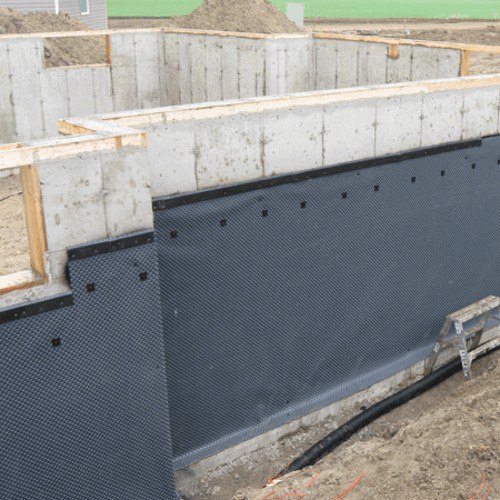
Below grade · drainage board + membrane · before backfill
The layer between the soil and the structure. Once the earth goes back, no one sees this again.
What you see
The top coat
Stone. Concrete. Steel. The finish — and the one everyone evaluates.
Why it lasts
The membrane
Polyurea. One monolithic, seamless skin. Up to 500% elongation — it moves as the structure shifts, so it doesn't crack.
What's behind it
The substrate
Concrete, framing, drainage plane. The thing that holds everything up — and the first thing water attacks if the membrane isn't there.
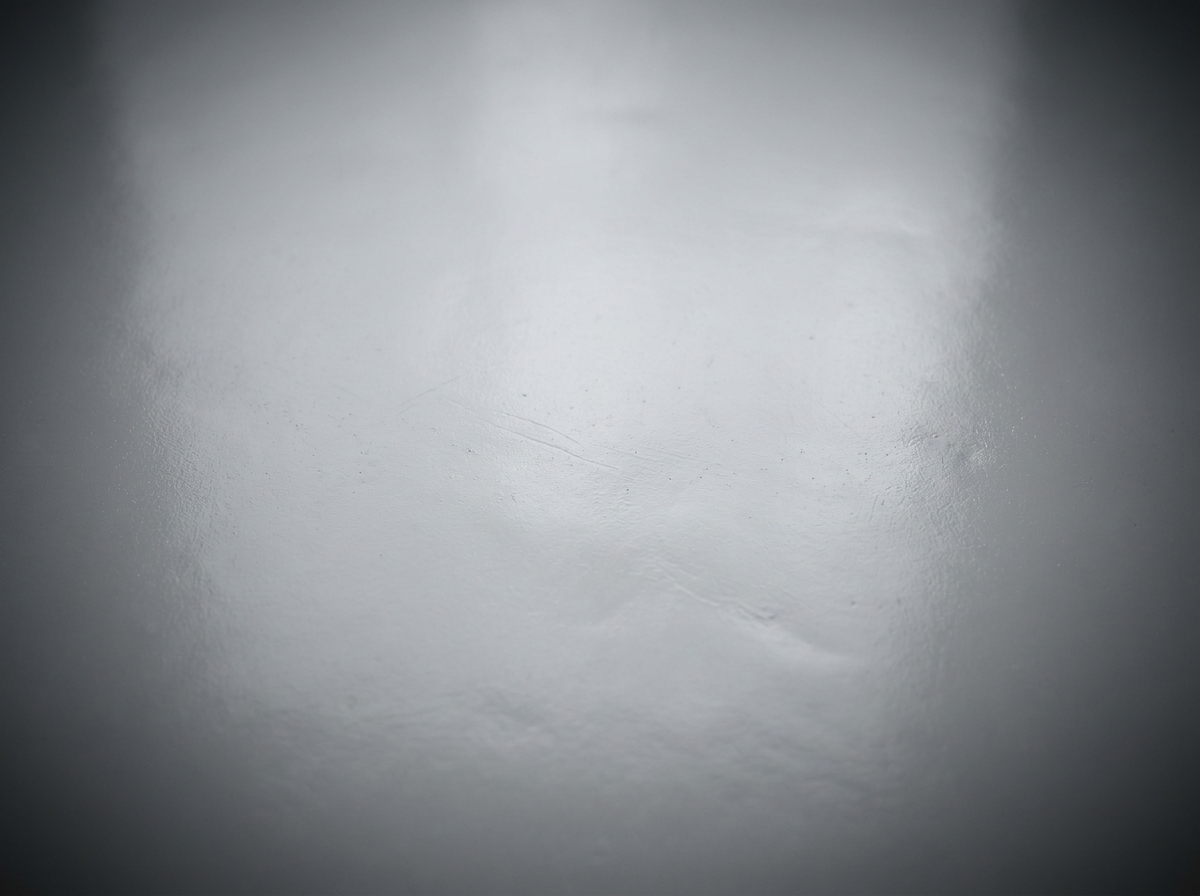
Field specimen — 001 · polyurea, close up
One skin. No laps. No seams. Elongation to 500%.
NTX Waterproofing — the material, shown.
Polyurea — the gold standard
We believe in the material.
We photograph it like we mean it.
500% Elongation
Standard waterproofing membranes crack as buildings settle — they weren't designed to move. Polyurea was. It elongates up to 500% and returns to its original shape, maintaining a seamless membrane even as the structure shifts. There are no seams to fail because there is no seam.
Rapid Cure
A polyurea application cures in seconds. Surfaces are back in service within hours. For commercial and industrial projects where schedule is money, this compounds across the life of a project.
Chemically Inert
Other systems degrade in temperature extremes — softening in heat, embrittling in cold. Polyurea is not affected by temperature variation in the ranges any building envelope will encounter. The system that passes inspection on day one performs identically in year fifteen.
Oil-Field-Grade Application
This material was developed for secondary containment and industrial surfaces where failure is not an option and performance is measured by ASTM standards, not contractor claims. We apply it at that specification. Every time.
How rare is a certified applicator?
In North Texas, you can count certified spray polyurea applicators on one hand.
Spray polyurea requires specialized two-component proportioning equipment, precise temperature control during application, and training that most waterproofing contractors haven’t pursued. This is not a system you learn on the job. The barrier to entry is high by design — the material does not tolerate improvisation.
NTX is one of those applicators. Our work has been independently verified through ASTM testing by the developer of the material.
Building science
Water doesn’t fail politely.
It finds the seam you didn’t seal, the joint you didn’t detail, the gap behind the cladding. Then it brings hydrostatic pressure, vapor drive, and mold along for the ride. We engineer for the water that will come — and give it nowhere to go.
01
Hydrostatic pressure
Water accumulates around a foundation and pushes. We relieve and redirect it before it forces its way through concrete and joints.
02
Vapor drive
Vapor moves from warm to cold through walls and ceilings. Where it hits the dew point, it condenses — inside the assembly. We design the thermal side of that equation.
03
Air movement
Tiny gaps leak conditioned air and carry moisture with it. The results: higher bills and hidden condensation. We close the envelope, not just the obvious holes.
04
Drainage planes
We assume water will get behind the exterior on a bad day — and design a path for it to exit. Control where it goes; the building stays dry.
Most waterproofing contractors operate on assumption — that the membrane holds, that the flashing works, that the drainage plane performs. We operate on building science: understanding where vapor drive moves moisture, where hydrostatic pressure accumulates, and where drainage systems actually need to exit.
The difference between these two approaches shows up about seven years after the project closes. We prefer not to have that conversation.
The work
Proof, not promises.
These are not renderings. Every project shown was completed by our crew, using the system we specify, at the standard we hold ourselves to — one that has been independently verified by third-party inspection using ASTM testing protocols.

Independent verification
The inventor of spray polyurea
inspected our work.
He found nothing wrong.
Dudley J. Primeaux II developed spray polyurea technology at Texaco beginning in 1986. He introduced it to the commercial market in 1988. He holds multiple patents on the chemistry and application of the material that has since become the standard for industrial waterproofing and secondary containment worldwide.
He also independently inspected an NTX Waterproofing installation.
Primeaux Associates conducted full ASTM-standard testing and issued a formal inspection report declaring a sound installation. We have published it in full, unedited, on this site. To our knowledge, no other spray polyurea applicator in Texas has submitted their work to this level of independent verification by the developer of the material.
This is not a marketing exercise. It is a documented record. You can read it yourself.
70–130+ mils
measured dry film thickness
46 ± 5 Shore D
hardness — on ratio
1 AMPP-certified
independent inspector
Inspected by
Dudley J. Primeaux II, PCS, CCI
Developer of spray polyurea technology, 1986–1988
Texaco Chemical Company · Primeaux Associates
We’re probably not the right call if…
- The decision is being made primarily on lowest bid
- The project timeline can absorb a warranty claim and a redo
- The spec is flexible and any waterproofing system will satisfy it
We are the right call if…
- The project cannot afford a waterproofing failure — structurally, operationally, or financially
- The spec requires a system that performs in temperature extremes and cannot have seams
- The project is in a sector where independent verification matters: government, industrial, O&G
- You want to work with someone who will be more technical and more particular than you expected
“Most trades do the job long enough to stop caring.
We got more obsessive.”
The NTX difference
Most waterproofing contractors have done the job enough times that it becomes routine. The materials go on the same way, the inspection gets signed, the warranty letter goes out. Nobody’s doing anything wrong. The standard is just the floor, not the ceiling.
We have never been able to do it that way. The longer we apply polyurea, the more particular we get about substrate preparation, application temperature, film thickness, cure time. The more convinced we become that a waterproofing system either performs at a high standard or it performs badly — there’s no comfortable middle.
This is not the right contractor for every project. It is the right contractor for the project where failure is not an acceptable outcome.

For architects, engineers & specifiers
Spec the material nobody else will apply.
When you specify spray polyurea, you specify performance that standard systems cannot match. You also face a practical challenge: finding an applicator who can execute the spec at a commercial-grade standard.
In North Texas — and in most markets — there are very few certified applicators. We are one of them. We carry full insurance and bonding, our work has been independently verified through ASTM testing by the developer of the material, and we travel to projects outside Texas when the work demands it.
We work with design-build teams and specification engineers as a technical partner — not a sub bidding for margin. If you’re writing a spec and want to talk through what polyurea can do for an assembly, we’re available for that conversation before the drawings are final.
Talk to us
This starts with a conversation,
not a quote.
We don’t show up with a number before we understand your project. Tell us what you’re working with — we’ll tell you honestly whether polyurea is the right system for it, and if not, why. We respond to serious project inquiries within one business day.